In 2026, the landscape of educational toys has evolved beyond simple ABC blocks, integrating advanced technology with foundational learning principles to foster critical skills for an increasingly complex world. Parents and educators are seeking tools that not only entertain but also genuinely prepare children for future academic and life challenges, moving past fleeting trends to invest in durable, impactful learning experiences. This guide cuts through the noise, identifying specific educational toys poised to deliver tangible developmental benefits, emphasizing innovation, engagement, and long-term value.
What to Look For in 2026 Educational Toys
Selecting an educational toy requires more than just a quick glance at its packaging. For 2026, consider these key criteria to ensure your investment genuinely supports a child's growth:
- Skill Development Focus: Prioritize toys that target specific cognitive, motor, or socio-emotional skills. Look for explicit benefits in areas like critical thinking, problem-solving, creativity, emotional intelligence, or STEM principles, rather than generic "learning" claims.
- Adaptability and Longevity: The most valuable educational toys offer scalability. They should grow with the child, providing multiple play modes or increasing complexity as skills develop, ensuring extended engagement and value beyond a single developmental stage.
- Engagement Mechanisms: Effective educational toys maintain active involvement. This can be achieved through interactive digital components, rich tactile exploration, compelling narrative elements, or opportunities for collaborative play. Passive entertainment offers limited educational return.
- Safety and Durability: Materials and construction must withstand rigorous play while adhering to the highest safety standards. Toys should be built to last, minimizing environmental impact and ensuring sustained use.
- Integration of Technology: For 2026, technology should enhance, not overwhelm, the learning experience. Seek out toys with augmented reality (AR), artificial intelligence (AI), or intuitive coding interfaces that are purposeful, age-appropriate, and seamlessly integrated into the play pattern.
- Ethical and Sustainable Production: Growing consumer awareness means seeking out toys made from eco-friendly materials or by companies with transparent, responsible manufacturing practices. This teaches children about environmental stewardship from an early age.
1. CodeCrafters Robotics Kit
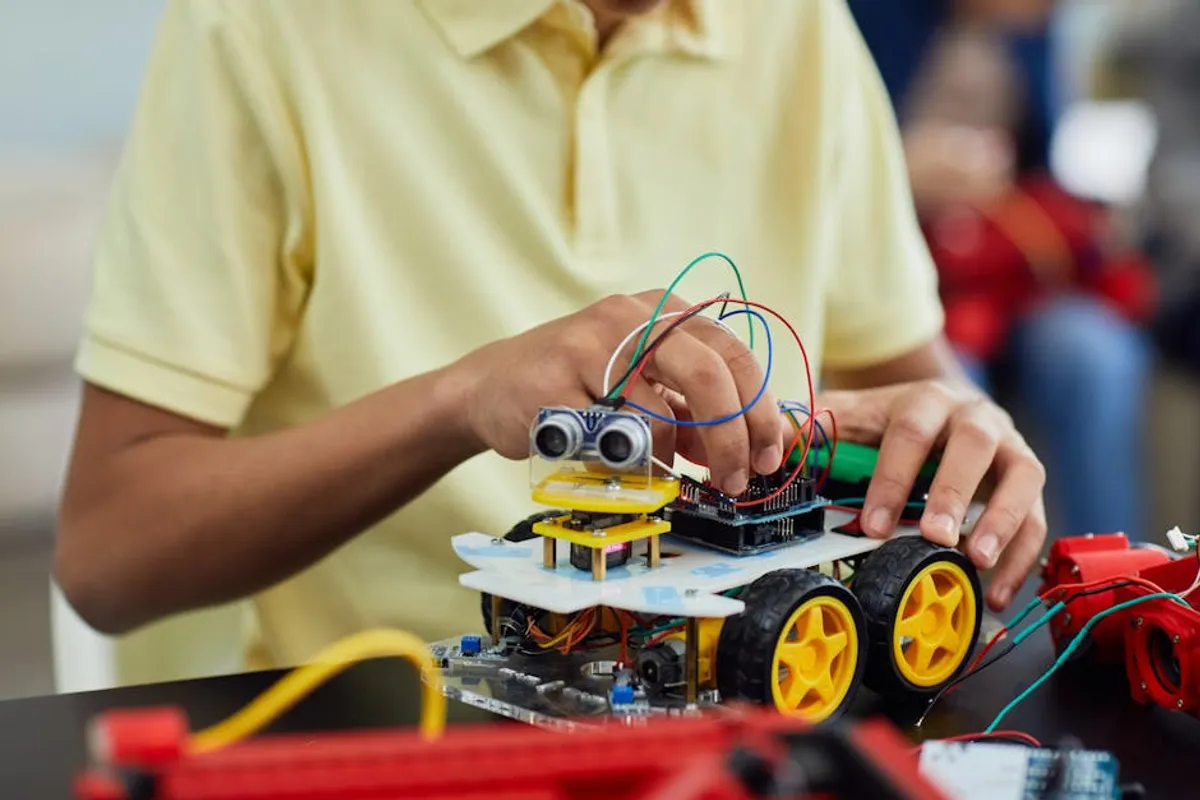
The CodeCrafters Robotics Kit introduces children aged 6-10 to fundamental programming concepts and engineering design through hands-on construction and interactive challenges. Each kit includes modular components that snap together without tools, allowing for the creation of various robotic models, from simple rovers to complex automated arms. The accompanying app provides guided coding lessons, starting with visual block-based programming and gradually transitioning to text-based commands, fostering a scalable learning path. Its open-ended design encourages experimentation and problem-solving, making abstract concepts concrete through tangible results.
Best for: Children demonstrating early interest in STEM, logical thinking, and hands-on building, particularly those who benefit from structured learning with room for creative exploration.
Pros: Scalable difficulty caters to a wide age range and skill progression; durable, child-safe components; intuitive app interface with engaging tutorials; promotes computational thinking and fine motor skills.
Cons: Initial investment is higher than many traditional toys; requires a compatible tablet or smartphone for full functionality; some advanced projects may require adult supervision.
Verdict: This kit stands out for its balanced approach to early coding education, offering both structured lessons and creative freedom. It effectively bridges the gap between digital and physical play, making complex STEM principles accessible and enjoyable for young learners.
2. BioBuilders Micro-Farm
The BioBuilders Micro-Farm is an indoor gardening system designed for children aged 7-12, focusing on biology, ecology, and sustainable living. It comes with a self-contained hydroponic unit, organic seed pods, and a nutrient solution, allowing kids to grow herbs and vegetables year-round. An integrated app monitors plant growth, teaches about photosynthesis and nutrient cycles, and provides challenges related to sustainable resource management. The tangible results of growing food from seed to harvest offer a powerful lesson in environmental science and responsibility.
Best for: Curious children interested in nature, science, and understanding where food comes from, providing a practical, long-term project that yields edible results.
Pros: Teaches core biological principles and environmental awareness; promotes patience and responsibility; provides fresh produce; durable, compact design suitable for indoor spaces.
Cons: Requires consistent monitoring and occasional nutrient refills; initial setup can be detailed; learning curve for optimal plant growth may frustrate some users.
Verdict: An excellent choice for fostering an early appreciation for science and sustainability. Its practical application of biological concepts makes learning directly relevant and rewarding, connecting children to the natural world in a meaningful way.
3. StoryWeaver AI Companion
The StoryWeaver AI Companion is an interactive storytelling device for children aged 4-8, designed to enhance language development, creativity, and imaginative play. This plush, screen-free companion uses adaptive AI to co-create unique stories based on a child's verbal prompts, keywords, and choices. It encourages narrative structure, vocabulary expansion, and active listening by responding dynamically to the child's input, making each storytelling session unique. Parents can set parameters for story themes and character types via a companion app.
Best for: Young children who love stories and benefit from interactive language practice, especially those developing early literacy skills and imaginative thinking.
Pros: Promotes verbal communication and creative expression; screen-free interaction reduces digital eye strain; adaptive AI ensures endless, personalized stories; robust, child-friendly design.
Cons: Relies heavily on clear verbal input, which can be challenging for very young or shy children; AI responses, while adaptive, can occasionally be repetitive; premium price point.
Verdict: This innovative companion effectively harnesses AI to create a rich, personalized language learning environment. It’s a compelling tool for fostering imaginative play and verbal fluency without relying on screens, making it a strong contender for early language development.
4. GeoExplorer AR Globe
The GeoExplorer AR Globe transforms traditional geography lessons into an immersive augmented reality experience for children aged 8-14. When viewed through a compatible smartphone or tablet, the physical globe comes to life with animated animals, historical landmarks, weather patterns, and cultural information overlaid onto its surface. Interactive quizzes and guided tours allow children to explore countries, learn about diverse ecosystems, and understand global issues. Regular content updates keep the learning fresh and relevant.
Best for: Visually oriented learners and children with an interest in world cultures, history, and environmental science, offering a dynamic alternative to static maps.
Pros: Highly engaging and interactive learning experience; covers a broad range of subjects including geography, history, and biology; frequent content updates; durable physical globe.
Cons: Requires a separate smart device for AR functionality; screen time is inherent to the AR experience; some users may find calibration challenging initially.
Verdict: The GeoExplorer AR Globe effectively merges physical and digital learning, making complex global information accessible and exciting. It's a powerful tool for broadening a child's understanding of the world through an engaging, interactive format.
5. EmotionEngine Play Set
The EmotionEngine Play Set is designed for children aged 3-7 to develop emotional intelligence and social skills through guided play. It includes a series of interchangeable character faces depicting various emotions, scenario cards illustrating social situations, and a "feeling meter" that helps children identify and express their own emotions. The accompanying parent guide offers prompts and activities to facilitate discussions about empathy, conflict resolution, and self-regulation. The tactile nature of the pieces encourages hands-on learning.
Best for: Young children needing support in identifying and managing emotions, developing empathy, and navigating social interactions, offering a concrete way to discuss abstract feelings.
Pros: Directly addresses critical social-emotional learning (SEL) skills; encourages communication and empathy; durable, child-safe components; includes a comprehensive parent guide for facilitated learning.
Cons: Requires adult involvement for maximum effectiveness; some children may find the concept abstract initially; limited replay value without new scenario cards.
Verdict: This play set offers a vital, hands-on approach to emotional intelligence, providing concrete tools for children to understand and articulate their feelings. It's an indispensable resource for fostering healthy social development in early childhood.
6. LogicLoom Puzzle System
The LogicLoom Puzzle System is a modular, multi-level puzzle game for ages 7 and up, focusing on critical thinking, problem-solving, and spatial reasoning. It consists of a base board and a collection of unique geometric pieces that must be arranged to complete increasingly complex patterns and structures. The system includes a digital companion app with thousands of puzzles, ranging from beginner to expert, and allows users to create and share their own designs. The tactile manipulation of pieces reinforces abstract logical concepts.
Best for: Children who enjoy challenges, have a natural inclination for puzzles, or need to develop stronger analytical and spatial reasoning skills, offering endless variations.
Pros: Develops advanced logical and spatial reasoning; offers a vast library of puzzles with scalable difficulty; durable, high-quality components; encourages persistence and strategic planning.
Cons: Can be frustrating for children who prefer less structured play; some advanced puzzles may require significant time investment; companion app is optional but enhances experience.
Verdict: An outstanding system for cultivating higher-order thinking skills. Its blend of physical manipulation and digital challenge ensures deep engagement, providing a robust platform for intellectual growth and strategic problem-solving.
7. ArtisanBot Design Studio
The ArtisanBot Design Studio is an entry-level robotics and art kit for children aged 9-13, blending creative expression with basic engineering principles. Users assemble a small, programmable drawing robot using snap-together components, then use a visual coding interface to design patterns, shapes, and even simple images. The kit includes various drawing tools and paper, allowing for immediate artistic output. It introduces concepts like algorithms, calibration, and iterative design in a visually rewarding context.
Best for: Creative children interested in art, design, and technology, offering a unique bridge between artistic expression and foundational robotics and coding.
Pros: Fosters creativity and design thinking; introduces basic robotics and coding in an accessible way; tangible artistic output provides immediate gratification; modular design allows for customization.
Cons: Requires careful assembly; coding interface, while visual, may still have a learning curve for some; ongoing cost for drawing supplies.
Verdict: This studio provides a compelling entry point into STEM for artistically inclined children. It demonstrates how technology can serve creative endeavors, making abstract technical concepts approachable through engaging, hands-on art projects.
8. SoundScape Music Lab
The SoundScape Music Lab is a digital music creation platform designed for children aged 8-14, introducing them to musical theory, composition, and digital sound design. It features an intuitive interface with virtual instruments, drum machines, and a sequencer, allowing users to compose, record, and mix their own tracks. Guided lessons cover rhythm, melody, harmony, and various musical genres. Collaboration features enable children to share and combine their creations with peers, fostering a sense of community and creative exchange.
Best for: Musically inclined children or those seeking to explore creative expression through sound, offering a comprehensive introduction to digital music production.
Pros: Teaches fundamental music theory and composition; highly engaging and creative outlet; wide range of virtual instruments and sound effects; supports collaborative projects.
Cons: Requires a compatible computer or tablet; initial learning curve for the digital interface; can be less appealing to children who prefer physical instruments.
Verdict: An excellent digital tool for cultivating musical talent and understanding. It democratizes music creation, allowing children to experiment with sound and compose their own pieces, fostering both technical skill and artistic confidence.
9. EcoEngineers Construction Blocks
EcoEngineers Construction Blocks are a sustainable building system for children aged 5-10, made from recycled plant-based polymers and designed for structural engineering and environmental awareness. The interlocking blocks come in various shapes and sizes, allowing for the construction of complex structures, vehicles, and architectural models. Each set includes fact cards about sustainable materials and engineering principles, encouraging children to think about eco-friendly design. The material is durable, non-toxic, and has a unique tactile feel.
Best for: Children who enjoy building and construction, providing a hands-on way to explore engineering concepts while promoting environmental consciousness and sustainable practices.
Pros: Made from sustainable, non-toxic materials; promotes fine motor skills and spatial reasoning; encourages creative problem-solving and structural design; durable and long-lasting.
Cons: Higher price point than conventional plastic blocks; limited color palette compared to some competitors; complex structures may require significant patience.
Verdict: These blocks offer a superior alternative for construction play, combining robust engineering challenges with a crucial lesson in sustainability. They are a thoughtful investment for fostering both creativity and environmental responsibility.
10. MindMaze Neuro-Puzzles
MindMaze Neuro-Puzzles are a series of advanced cognitive games designed for children and pre-teens aged 9-14, focusing on enhancing memory, cognitive flexibility, and complex problem-solving. Each puzzle presents a unique challenge that requires strategic planning, pattern recognition, and working memory to solve. The system includes both physical puzzle boards with intricate mechanisms and a companion app that offers digital versions and tracks progress, adapting difficulty based on performance. The puzzles are designed by cognitive scientists to stimulate specific brain functions.
Best for: Children who thrive on intellectual challenges and benefit from structured exercises to sharpen their cognitive abilities, particularly those with a strong aptitude for logic and strategy.
Pros: Specifically targets and strengthens key cognitive functions; offers a wide range of difficulty levels; combines physical and digital play; designed with scientific principles for maximum efficacy.
Cons: Can be highly challenging, potentially leading to frustration for some users; premium pricing reflects specialized design; not suitable for casual play.
Verdict: For parents seeking to actively boost their child's cognitive capabilities, MindMaze Neuro-Puzzles offer a scientifically informed and highly engaging solution. They provide a rigorous workout for the brain, promoting sustained intellectual development.
11. LanguageLink VR Headset
The LanguageLink VR Headset offers immersive language learning experiences for children aged 10-16, transporting them to virtual environments where they can practice conversational skills in a foreign language. Users interact with AI-powered characters and complete cultural missions in simulated cities, shops, and historical sites. The adaptive AI provides instant feedback on pronunciation and grammar, making learning dynamic and context-rich. Multiple languages are supported, with new content packs released regularly.
Best for: Older children and teenagers motivated to learn a new language, especially those who benefit from immersive, interactive practice and cultural exposure beyond traditional classroom settings.
Pros: Highly immersive and engaging language practice; provides real-time feedback on pronunciation and grammar; offers cultural context; supports multiple languages with expanding content.
Cons: Requires a dedicated VR headset, which is a significant investment; potential for motion sickness in some users; extended screen time in VR environments.
Verdict: This VR headset redefines language acquisition by making it an active, experiential process. It addresses the common challenge of practicing conversational skills, offering an unparalleled level of immersion and personalized feedback for serious language learners.
12. TactileTech Sensory Board
The TactileTech Sensory Board is designed for early learners aged 1-4, focusing on fine motor skills, sensory integration, and early STEM concepts through multi-sensory exploration. The board features a variety of textures, switches, gears, lights, and sounds that respond to touch and manipulation. Each interactive element is designed to stimulate different senses and encourage cause-and-effect understanding. Made from durable, non-toxic materials, it offers a safe and engaging platform for discovery and foundational skill development.
Best for: Toddlers and preschoolers who benefit from hands-on sensory exploration, developing fine motor skills, and understanding basic cause-and-effect relationships in a safe, engaging format.
Pros: Stimulates multiple senses for comprehensive early development; promotes fine motor skills and hand-eye coordination; durable and child-safe construction; requires no digital screen.
Cons: Limited long-term complexity; larger footprint than some other toys; may require occasional cleaning due to constant tactile interaction.
Verdict: An essential tool for early childhood development, the TactileTech Sensory Board provides a rich, engaging environment for toddlers to explore and learn. Its focus on foundational sensory and motor skills lays a strong groundwork for future learning.
Selecting the Right Educational Toy for Lasting Impact
Choosing an educational toy is an investment in a child's future development. To ensure the toy provides lasting impact and value, consider these practical steps:
- Align with Child's Interests: The most effective educational toy is one a child genuinely wants to engage with. Observe their natural curiosities—whether it's building, storytelling, music, or science—and select toys that resonate with those passions. A toy that aligns with existing interests will be used more consistently and effectively.
- Consider Developmental Stage: Ensure the toy's complexity matches or slightly challenges the child's current cognitive and motor skills. A toy that is too easy will quickly lose interest, while one that is too difficult can lead to frustration. Look for age recommendations but also assess your child's individual capabilities.
- Encourage Interaction: Prioritize toys that promote active engagement, whether through self-directed exploration, collaborative play with peers, or interaction with family members. Toys that encourage dialogue, problem-solving, and shared experiences often have a greater educational return than those promoting passive consumption.
- Evaluate Replay Value: Assess how many different ways a toy can be used. Toys that offer multiple play modes, adapt to new skills, or have expandable components (e.g., additional puzzle packs, coding challenges) provide greater long-term educational return and prevent boredom.
- Read Reviews and Expert Opinions: Consult reliable sources for insights into a toy's actual educational efficacy, durability, and user